Why You Procrastinate – And What to Actually Do About It
Introduction
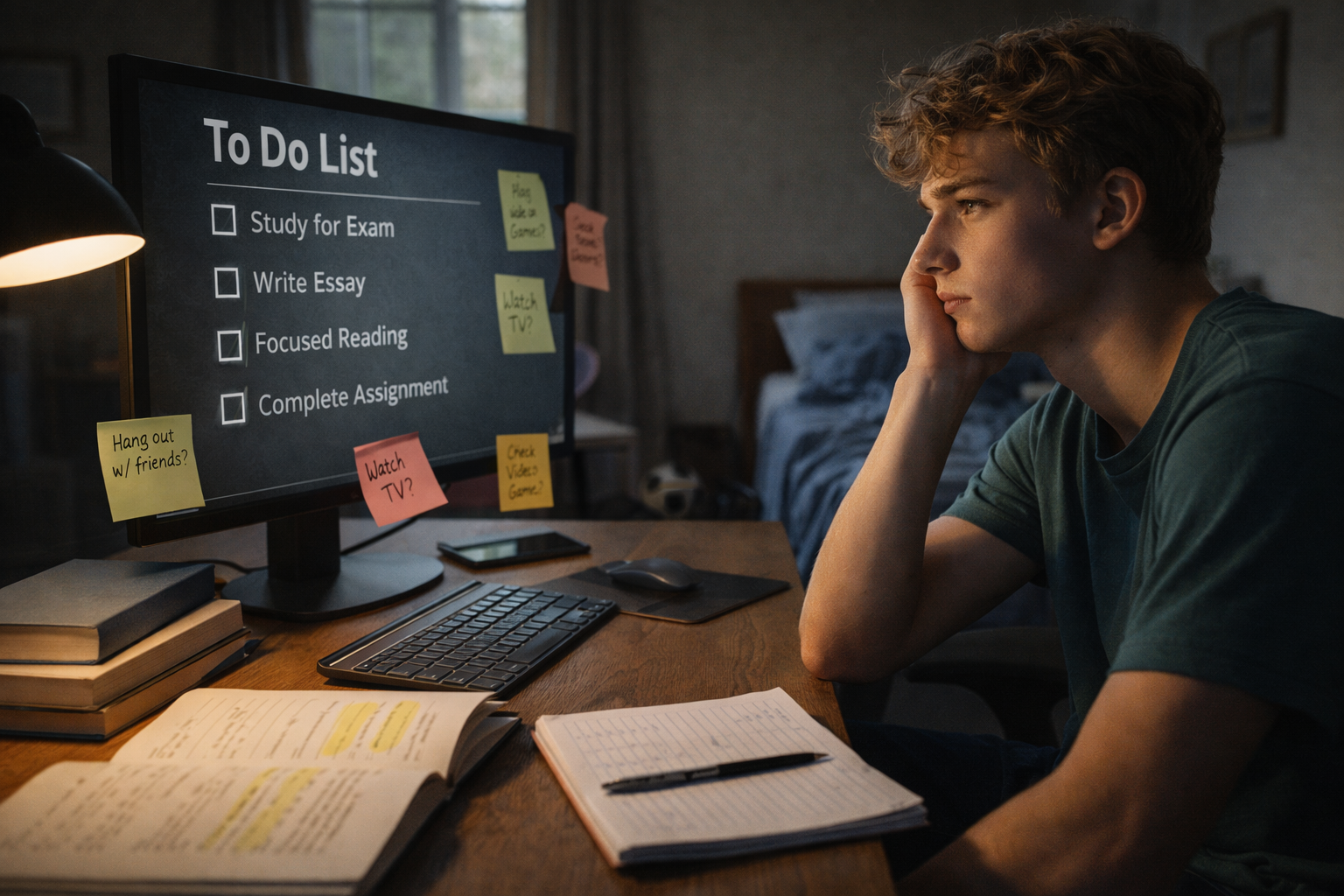
You have an assignment due. You know you need to start. But somehow, an hour passes and you’ve cleaned your room, scrolled through your phone, made a snack and reorganised your playlist – and the assignment hasn’t moved.
If this sounds familiar, you’re not alone. Procrastination is one of the most common struggles students face. But here’s what most people get wrong about it: procrastination is not a time management problem. It’s an emotional one – and understanding that changes everything about how you fix it.
Why We Actually Procrastinate
For a long time, people assumed procrastination was about being lazy or disorganised. But research tells a different story.
Procrastination is your brain’s way of avoiding negative emotions. When a task feels overwhelming, boring, confusing or high-stakes, your brain registers it as a mild threat – and steers you toward something that feels better right now. Scrolling, snacking, cleaning – anything that gives you a short-term sense of relief.
The problem is that the relief is temporary. The task is still there. And now you also have guilt on top of it, which makes starting feel even harder than before.
This cycle – avoidance, relief, guilt, more avoidance – is what keeps students stuck. Breaking it requires dealing with the feeling, not just the schedule.
1. Name What’s Actually Stopping You
Before you can move forward, it helps to identify what the task is making you feel. Is it:
- Overwhelm – the task feels too big and you don’t know where to start?
- Fear of failure – you’re worried the result won’t be good enough?
- Boredom – the subject genuinely doesn’t interest you?
- Confusion – you’re not sure what’s actually being asked of you?
Each of these has a different solution. A student who’s overwhelmed needs to break the task down. A student who’s confused needs to get clarity first. A student who’s afraid of failing needs a different kind of push than one who’s simply bored.
Knowing why you’re avoiding something is the first step to actually doing it.
2. Shrink the Starting Point
The hardest part of any task is almost always beginning. Once you’re moving, momentum builds naturally – but the brain resists the first step most strongly.
The trick is to make that first step so small that it feels almost embarrassing to say no to. Not “write my essay.” Instead: “Open the document and write one sentence.” Not “study Chapter 6.” Instead: “Read the first two paragraphs.”
This works because it removes the emotional weight of the full task. You’re not committing to finishing – you’re just starting. And more often than not, starting is all it takes to keep going.
3. Use Time Blocks, Not Open-Ended Sessions
Sitting down to “study until I’m done” is a recipe for procrastination. The brain resists tasks with no visible end point.
Instead, work in fixed blocks – 25 or 30 minutes of focused effort followed by a 5-minute break. This structure gives your brain a finish line to aim for, which makes starting feel far less daunting. Knowing you only have to focus for 25 minutes before a break lowers the emotional resistance significantly.
When the timer goes off, you can stop – or often, you’ll find you want to keep going.
4. Sort Your Environment Before You Sit Down
Willpower is a limited resource. Every temptation you have to resist while studying drains a little of it. This is why your environment matters so much when procrastination is a pattern for you.
Before you start a work session, take 2 minutes to reduce friction: put your phone in another room, close unnecessary browser tabs, let someone at home know you’re working so they don’t interrupt. These small changes don’t require willpower in the moment – you’ve already done the hard part before you sit down.
5. Stop Waiting to Feel Ready
One of the biggest procrastination myths is that the right mood will eventually arrive – that you’ll feel inspired, focused and motivated if you just wait long enough.
It almost never works that way. Motivation tends to follow action, not precede it. You rarely feel like starting until you’ve already started. The feeling of engagement and progress comes once you’re in the work, not before.
The most effective students aren’t necessarily the most motivated ones – they’re the ones who have learnt to act before the feeling arrives.
6. Be Honest About the Pattern
If procrastination is a consistent part of your academic life – not just an occasional bad day – it’s worth reflecting on whether the avoidance is pointing to something bigger. Chronic procrastination is often linked to anxiety, perfectionism or low confidence in a specific subject.
In those cases, the solution isn’t just a better schedule. It might mean speaking to a teacher, a tutor or a trusted adult about what’s making a subject feel so hard to face. Getting that support isn’t a weakness – it’s the smartest move available to you.
The Bottom Line
Procrastination isn’t a character flaw. It’s a very human response to discomfort – and it’s something every student deals with at some point. The goal isn’t to eliminate the feeling of not wanting to start. It’s to build the habits and strategies that let you act anyway.
Start small. Start now. The hardest version of the task is the one you haven’t begun yet.